Monday, February 16, 2009

Critical Responses to Esther's Inheritance

Hungarian Literature Online has a mostly interesting new article, Mammoth, Bard, or Great Author, on Esther's Inheritance and the terrible, awful, horrible possibility that the West is forming the wrong impression of Marai based on the selection of his novels available in English.

Wednesday, February 11, 2009

Some more Esther reviews

"George Szirtes's translation reads well apart from occasional jarring Americanisms, which I suspect were inflicted by the publisher." ~ The Independent

"Esther’s Inheritance is a frustrating little book. Márai purposefully allows terrible revelations to land without shock. And as Esther and Lajos regard themselves at a remove, inverting the archetypes of the good woman and the scoundrel, we are forced to regard them at one as well." ~ Bookslut

- Erik

Friday, January 30, 2009

Esther's Inheritance reviews

Largely positive reviews for Esther's Inheritance. See them all collected here at The Complete Review.

Saturday, September 27, 2008

Esther's Inheritance, coming November 4!

Saturday, April 19, 2008

Esther's Inheritance, November 2008

Random House has updated its Marai page and the next Marai novel in English, Esther's Inheritance, will be published in November. Huzzah!

I also note that both Embers and Casanova in Bolzano are currently available as ebooks for Amazon's Kindle (and presumably Sony's Reader), and that Esther's Inheritance will be, as well. I applaud this move-- I personally will be reading Marai in book form but no doubt some readers will prefer the ebook format.

Marai translator George Szirtes has a few excerpts, with some commentary, online at his blog: two thoughts, more.

Thursday, February 21, 2008

George Szirtes on the next Marai novels in English

I shot an email to George Szirtes, the translator of Casanova in Bolzano and The Rebels, asking him if he's working on another Marai novel. Here's what the gentleman wrote back:

"I have just returned the corrected proofs of a novella, Eszter hagyatéka (Esther's Inheritance), and have now received another two, related, novellas Az Igazi and Judit es az utohang. The English titles of those are undecided yet, but they would be roughly The Real Thing and Judith and The Echo (though utohang is also epilogue and legacy - though not in a legal sense). I have yet to see which sense fits best."

Wednesday, February 20, 2008

Subtropics editor on including Rebels excerpt

http://www.wordswithoutborders.org/?thread=Sarvas101907

David Leavitt, editor of the literary journal Subtropics, talks about why he chose to include the opening chapter of The Rebels in its January 2007 issue.

Wednesday, April 18, 2007

reviews of The Rebels

The Complete Review: "overheated, but effective period-piece."

Los Angeles Times: "Márai paints his characters so convincingly that, scene after scene, the story remains tense with suspense."

New York Sun: "The novel is marked by passages of bleak elegiac grandeur."

The New Yorker: "Back in 1930, though, he was still writing books that were merely very, very good."

Tuesday, March 20, 2007

George Szirtes profile

Th Scotsman has a profile and interview with George Szirtes, the Hungarian-born Englishman who translated Casanova in Bolzano and The Rebels. No mention of Marai, but there's lots of information on his life as a prolific poet. See also George Szirtes' home page.

Monday, January 22, 2007

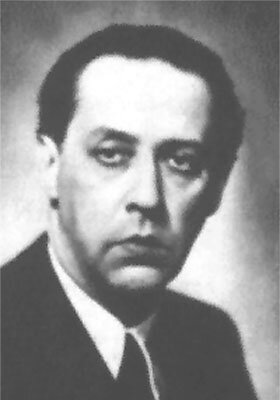
hey Knopf, can we get a better picture of Marai on the book jacket of The Rebels??

Knopf/Borzoi has done a superb job of bringing Marai to English so far, in every way except the choice of author photo! The one they used on Embers, Casanova and now apparently The Rebels makes poor Marai look terrible.


Might I suggest one of these, especially Marai as a young man, as he wrote The Rebels at age 30:


EDIT: WHOOPS! This young man is not Marai, but the Hungarian novelist poet Radnóti Miklós! Damn you, Google Images.

Friday, January 12, 2007

The Rebels excerpt in Subtropics

The January 2007 issue of Subtropics, a literary magazine from the University of Florida, contains an excerpt from George Szirtes' translation of The Rebels.

Marai in English

Old news, but according to The Believer, Knopf has the rights to a whopping 23 Marai novels...!

Monday, January 08, 2007

The Rebels cover unveiled!

Perhaps also designed by Peter Mendelsund, who did the elegant jacket cover of Casanova in Bolzano?

Monday, December 04, 2006

The Rebels summary

"It is the summer of 1918. As graduation approaches at a boys’ academy in provincial Hungary, the senior class finds itself in a ghost town. Fathers, uncles, older brothers—all have been called to the front. Surrounded only by old men, mothers, aunts, and sisters, the boys are keenly aware that graduation will propel them into the army and imminently toward likely death on the battlefield. In the final weeks of the academic year, four of these young men—and the war-wounded older brother of one of them—are drawn tightly together, sensing in one another a mutual alienation from their bleak, death-mapped future. Soon they are acting out their frustrations and fears in a series of increasingly serious, strange, and subversive games and petty thefts. But when they attract the attention of a stranger in town—an actor with a traveling theater company—their games, and their lives, begin to move in a direction they could not have predicted and cannot control."

Still no cover image, but sounds great!

Wednesday, August 02, 2006

The Rebels - March 2007

Finally! The next Marai book to be published in English will be The Rebels, translated by George Szirtes, who did a fine job translating Casanova in Bolzano. More info.

Hardcover, 272 pages
March 20, 2007
$24.95

Sunday, February 05, 2006

Hungarian fiction beyond Marai

Tim Wilkinson, the English translator of Imre Kertész, writes on translation and the state of translated Hungarian fiction. Wilkinson notes that only about two Hungarian novels per year are translated in the United States and Britain:

"While the fêting of Sandor Márai is all very well, it would be gratifying to see acknowledgement for more original writers of the recent past, such as Géza Ottlik or Miklós Mészöly."

It would be gratifying, but Hungarian literature and its proponents have done a pretty poor job, so far, of convincing the English-speaking world that Hungarian literature is worth giving a damn about. Apart from the success of Sandor Marai, publishers have recently tried to sell us on the genius of Peter Nadas' Book of Memories and Peter Esterhazy's Celestial Harmonies, two incredibly bloated, mediocre works. Imre Kertész, whom Wilkinson translates, is a fine author, but he writes mostly about the Holocaust, a topic to which entire bookstore shelves are already devoted.

The world can not be expected to care about the literature of an insignificant country of only 10 million people. If Hungarian literature wants to be acknowledged, it has to win readers over through sheer quality. Quality like Marai.

Wednesday, January 25, 2006

Embers - the film!


The Hungarian film adaptation of Marai's Embers premiers in Hungary on January 31 at the 37th Hungarian Film Festival. 4,000 copies of the film will be distributed to all the secondary schools in Hungary.

More info soon, but in the meantime, check out:

Official Site - Cast, photos, and trailer.

Tuesday, January 24, 2006

Jemery Irons on Embers

In a recent interview with the London Evening Standard, Irons made some observations about taking on the production of Embers:

"I'd been looking for something to do on stage for five years, and then I read a novel by a Hungarian writer called Sandor Marai and loved it..."

"My initial reaction was that I didn't want to play that old - I'm, what, 56, 57 - but there are 24 pages of monologue in the second act; it gets harder to remember lines when you get older. The play is about male friendship, love and betrayal."

"It is the same subject matter as in Brideshead, funnily enough. That male platonic friendship, spanning many years. Male friendship is something that isn't often examined."

Read the whole thing

Tuesday, October 18, 2005

Jeremy Irons' Embers

Jeremy Irons will return to the London stage to star in a theatre production of Sandor Marai's Embers. This is his first play in London in 20 years, and he'll be portraying The General, who meets his friend Konrad again for the first time in many decades (coincidence?).

The stage adaptation is by British playwright Christopher Hampton, who seems to have built a career on stage adaptations, and directed by Australian Michael Blakemore.

With only two Sandor Marai novels published in English, the world's top English actors are lining up to portray Marai's characters (see Patrick Stewart and Sean Connery, below) . What will happen when we get more of his oeuvre in print?

Thursday, October 06, 2005

The next Marai novel in English

The Rebels. So far, no news on translator or release date.

Sunday, September 04, 2005

Embers: the Film

Embers was set to start filming in 2004 with legendary director Milos Forman (Amadeus, One Flew Over the Cuckoo's Nest) at the helm, but Sean Connery pulled out of negotiations to star as The General and the project is currently adrift. Forman is directing other projects, and it's unclear whether the film will ever get made.


It was set to star some fine actors: Winona Ryder as Krisztina and veteran Austrian actor Klaus Maria Brandauer as aged Konrad. What would a film of Embers be like? I wonder whether a film would focus on the love triangle while losing sight of Marai's observations on history and life.

Patrick Stewart's Embers

BBC Radio 3 created a 90 minute radio drama adaptation of Marai's Embers starring Patrick Stewart as the General. It aired on British radio in 2004 and earlier this year, but there's currently no place to purchase a copy. It was adapted by playwright Lou Stein with music composed by Deirdre Gribbin (although I'm unsure how much music figures into the radio play).

Tuesday, August 30, 2005

Marai-esque movie: Before Sunset

This movie might as well have been written by Márai: one big dialogue between former lovers meeting again for the first time in ten years.

Monday, August 29, 2005

Tibor Fischer's top 10 eastern European novels

Tibor Fischer, the Hungarian-British novelist who wrote Under the Frog (the title being a reference to the Hungarian saying, "Under the frog's ass," meaning as low as you can possibly get), placed Embers in the #2 spot in his list of the Top 10 Eastern European novels for The Guardian.

Marai moment: Yi Yi

Readers of Proust refer to "Proustian moments" that take place throughout In Search of Lost Time as these moments when a smell or sight triggers an overwhelming flood of memories. Similarly, a single type of scene recurs throughout all of the Marai works I've read or know of: an encounter between old friends or lovers for the first time in many years.

There is just such a "Marai moment" in the Taiwanese film, Yi Yi (there's a number of Kodak moments, as well-- note the cover): a middle-aged father, a family man and salaryman, accidentally runs into an old girlfriend/fiancee from college for the first time in something like 15 years. This excellent film by Edward Yang shares much in common with Marai: the concerns of middle age, the complete candour that can take place between two adults finding themselves in a Marai moment... Good stuff.
eXTReMe Tracker