Sunday, September 04, 2005

Embers: the Film

Embers was set to start filming in 2004 with legendary director Milos Forman (Amadeus, One Flew Over the Cuckoo's Nest) at the helm, but Sean Connery pulled out of negotiations to star as The General and the project is currently adrift. Forman is directing other projects, and it's unclear whether the film will ever get made.


It was set to star some fine actors: Winona Ryder as Krisztina and veteran Austrian actor Klaus Maria Brandauer as aged Konrad. What would a film of Embers be like? I wonder whether a film would focus on the love triangle while losing sight of Marai's observations on history and life.

Wednesday, June 15, 2011

Portraits of a Marriage - my review

Each of Sandor Marai's great novels explores a facet of love. Embers was about the bonds of male friendship, Casanova in Bolzano about romantic love, and Portraits of a Marriage is about the relationship between love and class, or love and society.

The plot, in two spoiler-free sentences: the book tells the story of a love triangle. The first big chunk is narrated in the voice of the first wife, the second part is told by the husband, and the third part (originally published as a separate novella) is told by the 2nd wife. Originally this was published as two novellas. I believe the first two parts were published as a single novella, "Iz igazi" ("The real thing") in 1941, while the second half was published only in 1980 as "Judit... és az utóhang" ("Judith and the afterword"), although I am unsure when it was written. The translation is again by Hungarian-English poet George Szirtes, who does an excellent job.

I wonder if Portraits will find its audience, now that it has finally been published in English, because while the themes of Marai's previous books (love, friendship) are universal and will resonate in any time or society, Portraits is concerned, nay, obsessed with the struggle between societal class and love, a struggle that may not really interest most contemporary American readers, or at least not to the exhaustive lengths that Marai spends chronicling it.

In Portraits, Marai preserves a lost world, Hungary before WWII, a society stratified with nobility, upper middle class, middle class, "commoners", "peasants", and all sorts of finer gradations within those, all surreptitiously warring and conniving, in mostly tiny ways and gestures, for status. Money and power, too, but mainly (surprisingly or unsurprisingly) for status. Marai focuses especially on the values, habits, duties and weaknesses of those people either inhabiting or jockeying into Hungary's upper middle class, a kind of eradicated tribe (which ceased to exist after WWII and the communist years afterward), an extinct species that he attempts to preserve, as if in amber, for posterity.

Most of us have read books about class and love. Romeo and Juliet, the works of Jane Austen... But in those stories, the class element serves mostly as a plot device, an adversity the protagonist lovers must overcome (the Montagues vs. the Capulets, Emma can't marry Mr. Darcy because she's poor, or whatever). But Marai doesn't use class to create narrative tension. The tension between class and love, here, is his obsession. And again, I suspect that most readers today just aren't that interested in the topic, at least not 400 pages interested. The fact that there's only one other Amazon review so many months after publication bears my suspicion out.

Which is a shame, because Portraits is a titanic masterpiece. It is literature's reigning masterpiece on love and class, yes, but it's a also a masterpiece by any measure, in almost any company. When Embers was first published in English in 2000, excited reviewers talked of re-assessing the 20th century literary pantheon, and the most eager among them suggested that Marai might rank among the greatest writers of the century: Joyce, Proust, Mann... I'm not sure if, now that the rush has worn off and more books published, they would stand by those assessments, but as more and more Marai becomes translated, his place in the pantheon only gets more assured, more deserved, in my opinion. He's a major writer, and this is his biggest, most complex, and, well, major work to be translated so far. (The man wrote over 40 books, so who knows what yet remains!).

Marai again proves himself a genius of humanity in Portraits. Like Proust, he understands exactly how people really think, how they really behave, and captures it all perfectly on paper. He's the kind of writer where every few pages you think (or exclaim), "Yes, that's exactly how life is!" Although Marai knows a narrative trick or two and knows how to craft page-turning plots, in his way, what really keeps you glued to the page is Marai's wisdom. It's a term that can mean many things, but this is "wisdom literature" in its finest and purest sense: the thoughts of an almost superhumanly wise individual. It takes a master to not only bring characters to life as completely as Marai does here, with his three very different protagonists, but to speak so convincingly in their voices.

If you enjoyed Embers or Marai's other books, give Portraits a try. There is so much more to be written about this incredible book.

~Erik Ketzan

Friday, April 08, 2011

Portrait of a Marriage - annotated

I've started an annotation for the recently published Portraits of a Marriage over at Literarywiki.org. A handy, spoiler-free page-by-page annotation to certain references, ideas and themes in the novel. It's in wiki format, so if you have some to contribute, feel free to add them (after you register to edit).

I'm really loving Portraits of a Marriage. Like Embers and Casanova in Bolzano, this one seems like one of Marai's major works. Whereas Embers tackled the theme of friendship, Casanova in Bolzano the theme of romantic love, Portraits of a Marriage explores the intersection of love and society. It's masterful, and the translation reads beautifully.

Hope you all enjoy the novel--

Erik

Tuesday, January 24, 2006

Jemery Irons on Embers

In a recent interview with the London Evening Standard, Irons made some observations about taking on the production of Embers:

"I'd been looking for something to do on stage for five years, and then I read a novel by a Hungarian writer called Sandor Marai and loved it..."

"My initial reaction was that I didn't want to play that old - I'm, what, 56, 57 - but there are 24 pages of monologue in the second act; it gets harder to remember lines when you get older. The play is about male friendship, love and betrayal."

"It is the same subject matter as in Brideshead, funnily enough. That male platonic friendship, spanning many years. Male friendship is something that isn't often examined."

Read the whole thing

Wednesday, January 25, 2006

Embers - the film!


The Hungarian film adaptation of Marai's Embers premiers in Hungary on January 31 at the 37th Hungarian Film Festival. 4,000 copies of the film will be distributed to all the secondary schools in Hungary.

More info soon, but in the meantime, check out:

Official Site - Cast, photos, and trailer.

Tuesday, October 18, 2005

Jeremy Irons' Embers

Jeremy Irons will return to the London stage to star in a theatre production of Sandor Marai's Embers. This is his first play in London in 20 years, and he'll be portraying The General, who meets his friend Konrad again for the first time in many decades (coincidence?).

The stage adaptation is by British playwright Christopher Hampton, who seems to have built a career on stage adaptations, and directed by Australian Michael Blakemore.

With only two Sandor Marai novels published in English, the world's top English actors are lining up to portray Marai's characters (see Patrick Stewart and Sean Connery, below) . What will happen when we get more of his oeuvre in print?

Sunday, September 04, 2005

Patrick Stewart's Embers

BBC Radio 3 created a 90 minute radio drama adaptation of Marai's Embers starring Patrick Stewart as the General. It aired on British radio in 2004 and earlier this year, but there's currently no place to purchase a copy. It was adapted by playwright Lou Stein with music composed by Deirdre Gribbin (although I'm unsure how much music figures into the radio play).

Monday, August 29, 2005

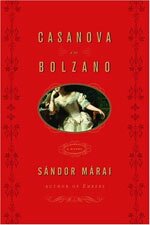
Casanova in Bolzano

The second Marai novel to be published in English by Knopf. If Embers was primarily about friendship, Casanova is primarily about love between man and woman. It is clear that Sandor understands people better than most writers of the twentieth century, or in fact any that come to mind. From his writing, Sandor must have lived-- really lived--

Casanova is Bolzano is not a young man's (or woman's) book. Its insights are generally for those who've lived a good chunk of life already-- experienced human ambition and disappointment, true love and one night stands, youth and age, celebrity and exile, and grappled with the sometimes conflicting dictates of love and sex. It's a mature work from a mature writer.

It is also not a historical novel; it has precious little to say about the eighteenth century, or Italy, or even specific characters. The characters in Bolzano are not even "characters," as such-- in fact, the name "Casanova" does not appear once, outside of Sandor's introduction (the original Hungarian title is "Vendégjáték Bolzanóban," which also does not mention "Casanova"). It's about people, archetypes.

How does it compare with Embers? It starts off a little more slowly (The NYTimes review called it, "a novel of exquisite slowness and refreshing oddity"), but quickly picks up for one classic Marai scene: two people in a room meeting again for the first time in years.

See The Complete Review: Casanova in Bolzano - a summary of all the reviews and useful links.

Tuesday, August 23, 2005

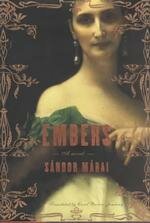
Embers

This is the first of the Marai Sandor novels to be published in English by Knopf. It is translated by Carol Brown Janeway, who translated not from the Hungarian but the German edition. This is pretty dubious translation practice, and a review at The Complete Review indignantly called this "literary sin," but the prose reads remarkably well. The sentences are beautifully rendered, and my Hungarian mom, who's read both the original and the English, greatly preferred this translation to the English translation of Marai's Casanova in Bolzano, which was translated straight from the Hungarian by someone else. Oh, well.

Embers is a masterpiece, and a short one, at that. It can be read in a day or two, which makes it a perfect recommendation to friends (you can't exactly tell someone to read Gravity's Rainbow). The premise of the story is that two old men meet again for the first time in forty years to discuss what ended their friendship so many years ago.

Wednesday, June 23, 2010

More reviews for Esther's Inheritance

Some more reviews around the web:

The Complete Review: "ultra-melodramatic character studies from another age."

The Guardian

Financial Times: "The writing is taut and the atmosphere of suspense carefully constructed, but this story is very much of its time."

The Telegraph, review by English-Hungarian novelist Tibor Fischer: "Of Márai’s work available in English, Conversations in Bolzano is the most cerebral. The Rebels is, I would argue, the best so far, but perhaps too dark for many readers. I suspect Esther’s Inheritance, elegantly rendered by the poet George Szirtes, will rival the commercial success of Embers – I can see the reading groups having a good ding-dong about this one."

~ Erik Ketzan

Monday, January 22, 2007

hey Knopf, can we get a better picture of Marai on the book jacket of The Rebels??

Knopf/Borzoi has done a superb job of bringing Marai to English so far, in every way except the choice of author photo! The one they used on Embers, Casanova and now apparently The Rebels makes poor Marai look terrible.
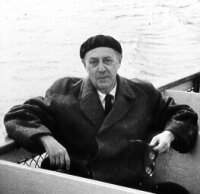
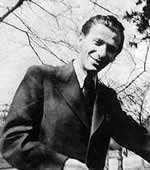
Might I suggest one of these, especially Marai as a young man, as he wrote The Rebels at age 30:


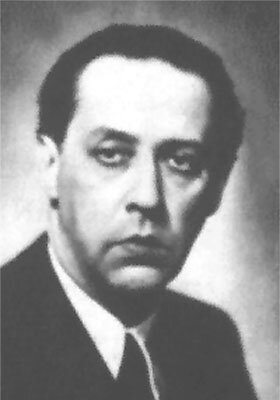
EDIT: WHOOPS! This young man is not Marai, but the Hungarian novelist poet Radnóti Miklós! Damn you, Google Images.

Saturday, April 19, 2008

Esther's Inheritance, November 2008

Random House has updated its Marai page and the next Marai novel in English, Esther's Inheritance, will be published in November. Huzzah!

I also note that both Embers and Casanova in Bolzano are currently available as ebooks for Amazon's Kindle (and presumably Sony's Reader), and that Esther's Inheritance will be, as well. I applaud this move-- I personally will be reading Marai in book form but no doubt some readers will prefer the ebook format.

Marai translator George Szirtes has a few excerpts, with some commentary, online at his blog: two thoughts, more.

Monday, August 29, 2005

Tibor Fischer's top 10 eastern European novels

Tibor Fischer, the Hungarian-British novelist who wrote Under the Frog (the title being a reference to the Hungarian saying, "Under the frog's ass," meaning as low as you can possibly get), placed Embers in the #2 spot in his list of the Top 10 Eastern European novels for The Guardian.
eXTReMe Tracker